Saturday, July 28, 2012

Compound vs. Crossbow

Here are the more high tech bows about to face off in Round 2 Compound vs. Crossbow!

Compound


Pros and Cons:


Pros:

  • Quiet.
  • Has a lot of energy coming from the bow into the arrow because of the long power stroke.
  • Lightweight.
  • Accurate.
  • At full draw the pulleys at the end of the bow turn and give you let-off to make it easier to hold at full draw.
  • It isn't quite as traditional or original as the Recurve or Longbow, but it is a little bit original, after all, it is a bow.
Cons:

  • Because it is lightweight, slight movement can cause the arrow to be a little left or right of the target.


Crossbow

Pros and Cons:

Pros:
  • It can remain at full draw for a long period of time while hunting.
  • You can mount a scope or a red dot sight to it.
  • Some crossbow models have an automatic cocking mechanism.
Cons:
  • The shorter crossbow arrows and the short power stroke of the crossbow can't match the energy stored in the compound bows longer arrows because of the compounds longer power stroke.  The crossbows have to have a higher poundage to make up for this.
  • Crossbows are hard to pull back or crank back.
  • The higher poundage also is hard on the strings and cables and other components.
  • Heavy.

Compound wins!  No offence crossbow, I would still like to shoot an arrow from you sometime.  People who make crossbows are still trying to make their crossbows lighter and more efficient.
Round 3 is next with the final contestants:  Compound vs. Recurve! 

Wednesday, July 25, 2012

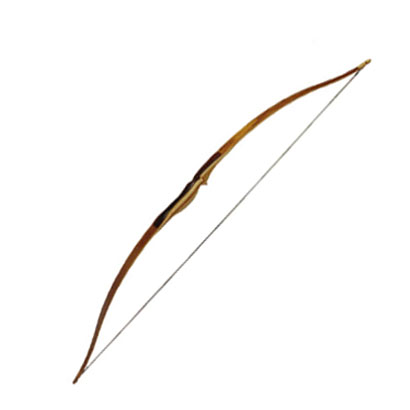
Longbow vs. Recurve


I will be doing a bow tournament in my next couple articles to determine what is the ultimate bow (though all are good, don't take me wrong). I won't be judging anything to win just because I want it to, I will pick the winner the same way I would pick out what bow I want on a normal day (looking at pros and cons and things like that). Today, read Round 1 Longbow vs. Recurve!

Longbow


Pros and cons:


Pros:

  • It will forgive minor mistakes made by the person that is handling it.
  • Its quiet.
  • Lightweight.
Cons:
  • Its length makes it harder to carry it around in brush.
  • Hard to pull back and harder to keep at anchor point because of there being no let-off like a compound bow.

Recurve Bow


Pros:
  • It can store more energy in its limbs.
  • Its a little lighter than the longbow.
  • They are smaller than the longbow which makes them easier to carry places.
Cons:
  • Hard to pull back and has no let-off.


Recurve Wins!

Both of these bows are traditional and original (in some ways).  Someday I even would like to shoot both of them.  Next time the more technical bows face off!  Don't miss Round 2 Compound vs. Crossbow!  Whichever bow wins Round 2 goes against  the Recuve Bow in Round 3!


Tuesday, June 19, 2012

Selecting a Broadhead

For those who are just beginning bow hunting, broadhead arrowheads are used to kill deer.  That information may not have been necessary but its good to know.  I am going to talk about the two most popular broadhead types, fixed and mechanical (or expandable).

Fixed Broadheads
Fixed broadheads are the most used broadheads the world has ever known.  Even the Indians used fixed broadheads, though they didn't call them that.  Here are the pros and cons of a fixed broadhead.

Pros

  • They are sturdy
  • Cut on impact
  • Don't need a high poundage bow to ensure penetration
  • Definite cut
  • Blades are usually replaceable
Cons

  • Could cause personal injury while putting on the blades and attaching it to the arrow
  • Smaller cutting area than a mechanical broadhead    
                                                                                         
Mechanical Broadheads
These broadheads have little tips on them that help the blades to expand on impact.  The blades are usually held together by O-rings, elastics or bands of some type.  Since the blades are in the arrowhead this type of broadhead flies like a field point until impact.

Pros
  • Flies like field points would
  • Less chance of injury since blades are in the arrowhead
  • A bigger cutting area than fixed broadheads 
Cons
  • Risk or mechanical failure
  • Needs a faster arrow speed to open up the blades on impact, which leads to needing a higher poundage on you bow
  • Doesn't cut until the blades are open

I plan to stick with fixed broadheads.  But you decide what you want to use.       


Monday, May 28, 2012

More Edible Wild Plants

Here are some wild plants ( and parts of trees ) that are edible.

Cattails
These plants can be found next to ponds, swamps, lakes, and wherever there is some swampy area.  Pull them up and you can eat their tender white base in early spring.  In July, when the brown "corn cob" at the top of the plant is first developing ( it will look like a green tube ) you can eat it.  Snap it off and peel the husk away, then boil or roast them.  It tastes like corn on the cob.  The roots can be eaten ( once they are peeled ) once roasted.


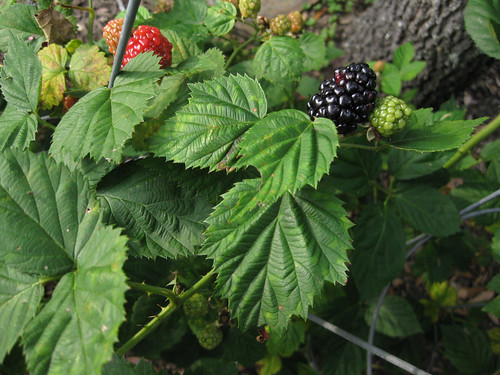
Blackberries
These plants are great because you can find them almost anywhere!  They taste great and they are usually at their peak in ripeness in June and July.  Eat the black ones right on the spot or eat them back at camp after you wash them with water that has been purified before you eat.


That's all for now!

Thursday, April 26, 2012

Camping

Camping is a fun thing to do right?   You probably know about making shmores and roasting hotdogs.  Well here are some more things to do while camping!

1.Smoked Hotdog On A Stick
This tastes great without any bun or ketchup!  First you just roast you hotdog like normal till is just the way you like it.  Then you pull it up and leave it in the smoke for a few minutes.  Then just eat it of the stick!

2.Instead of hiking all the time, do a little bit of biking sometime!
Bring some bikes, it's a good way to go sightseeing (if the place you are staying allows bikes).  Who doesn't like to ride bikes!?

3.Play Some Card Games
Bring UNO or some similar easy to play card game.  It's great to do something like that when its to hot to bike or hike.

4.Go Fishing
Bring your fishing rods if the place your staying has some fishing areas.  Its fun to fish in a stream or lake or pond or whatever!

5.Go On A Nature Walk
See some of the parks animals while your on your hike.

With all these things above, which means numbers 2 and 4, check to see if you can do these things at the park website or call the park to see what other activities they may do.

Have a fun time camping!